
How to Divide a Room Without Building a Wall
Posted by Panelscreens on 27th Oct 2026
Posted by Panelscreens on 27th Oct 2026
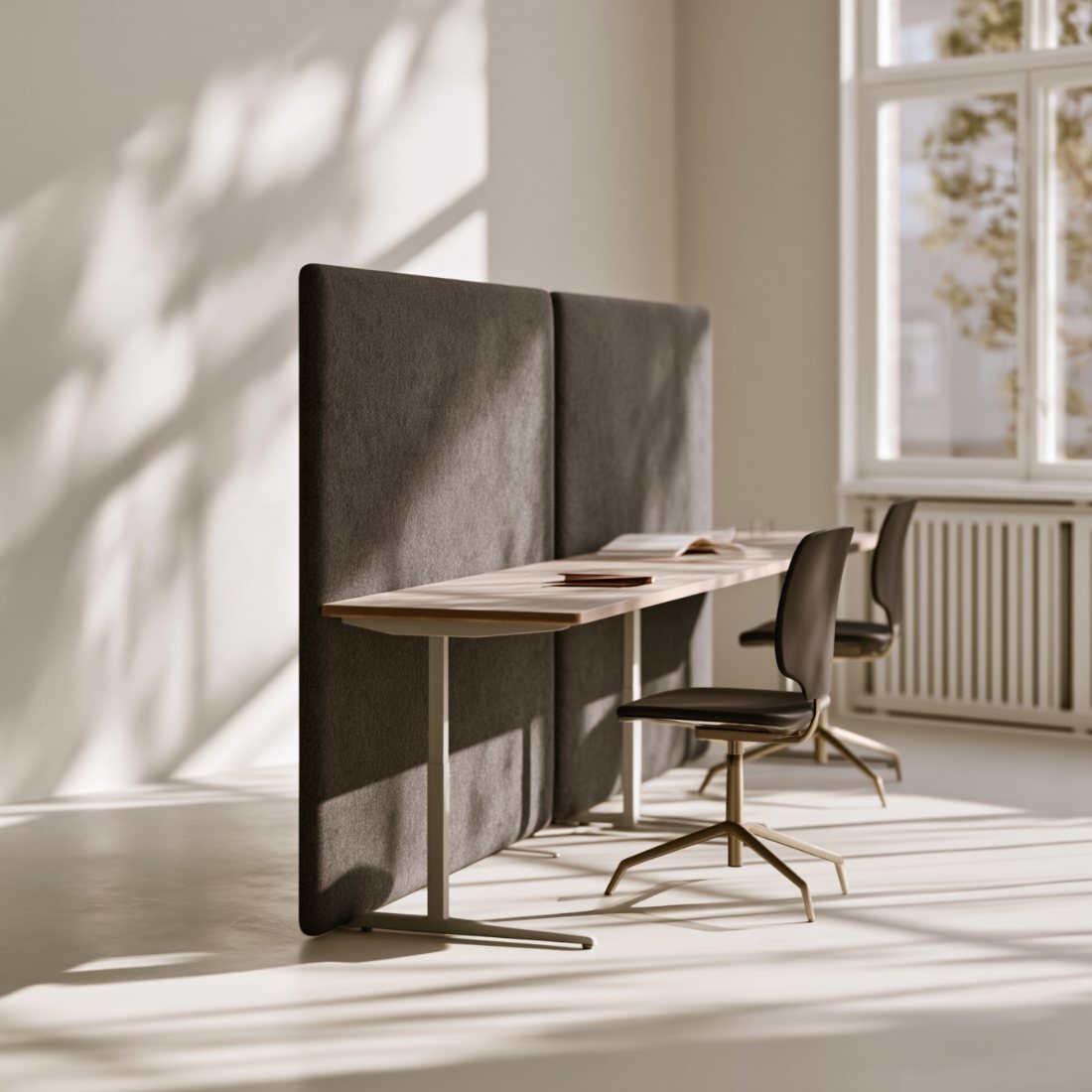
The quickest way to divide a room without building a wall is with freestanding room divider screens. They split one open space into team areas, quiet zones or meeting spots in an afternoon, with no builders, no mess and no planning. This guide covers the main options, how tall to go and how to plan the layout.
Room divider screens, also called room partition panels, link together into straight runs, L-shapes and bays. Fabric screens give visual privacy; acoustic screens also absorb speech.
Acoustic office screens have a sound-absorbing core, typically 38mm to 70mm thick, that soaks up voices and phone calls. They suit sales teams, call areas and busy open-plan offices.
Mobile office screens sit on lockable castors, so you can wheel them into place for a meeting and move them away afterwards.
Folding concertina screens open out to divide a space and fold flat for storage, which makes them ideal for shared rooms, schools and event spaces.
Choose the height by what you want to hide:
Our tallest screens are 2100mm and stand on fixed feet. If you want screens on castors, we recommend a maximum of 1800mm so they stay stable when moved.
Send us your room sizes and a few photos and we can suggest a layout. As a UK manufacturer, we can usually tell you what will work from photos alone.
If you need to split a space quickly, freestanding office screens and partitions are the simplest option: no building work, no fixings into walls, and they can be moved when your layout changes. For larger areas, our office room dividers go up to 2.1m high and link together into longer runs.
Yes. Freestanding room divider screens stand on their own feet, so nothing is fixed to the floor, walls or ceiling. They go up in minutes and can be moved or reused when your layout changes.
1200mm gives seated privacy, 1500mm hides people sitting at desks, and 1800mm to 2100mm hides people standing. Our tallest screens are 2100mm on fixed feet. For screens on castors we recommend no taller than 1800mm so they stay stable when moved.
Acoustic room dividers absorb sound rather than block it. Their sound-absorbing core soaks up speech, so noise carries less across the room, but they will not soundproof a space the way a built wall can.
Our freestanding screens go up to 2100mm, which divides most rooms well while keeping light and air moving. If you need a full-height, sealed room, that is a building job rather than a freestanding screen.
Ready to start? Browse our room divider screens or get in touch for help with your layout.
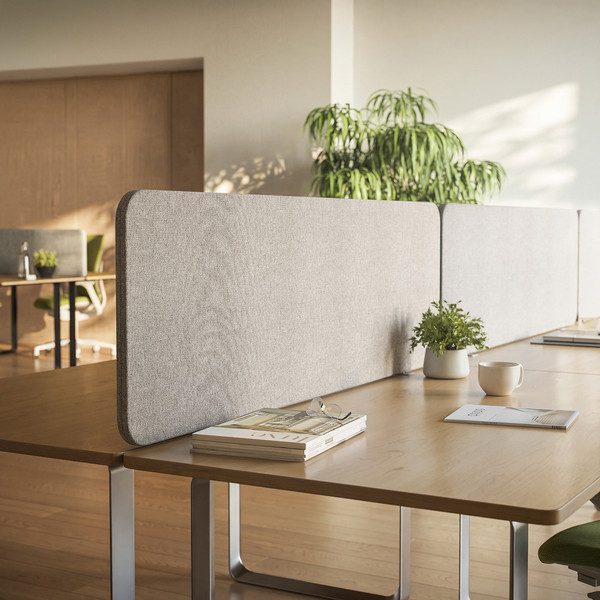 Introducing Sonus 25: A Slim, Pinnable Fabric Desk Screen
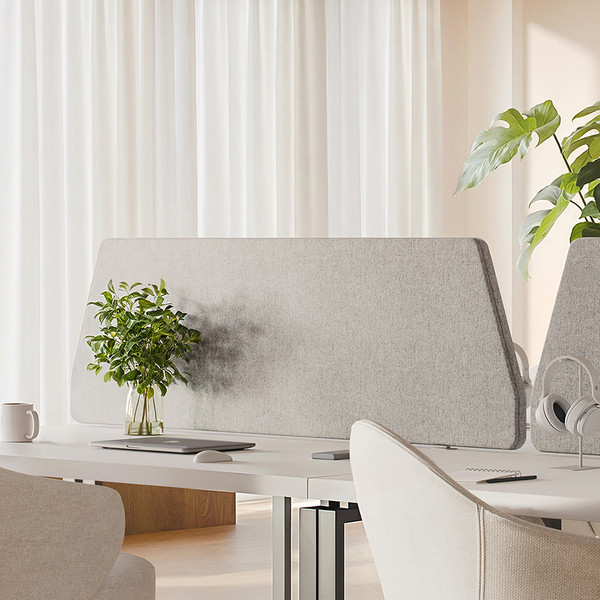 Introducing Delta 38: An Angled Acoustic Desk Screen
 How to Divide a Room Without Building a Wall
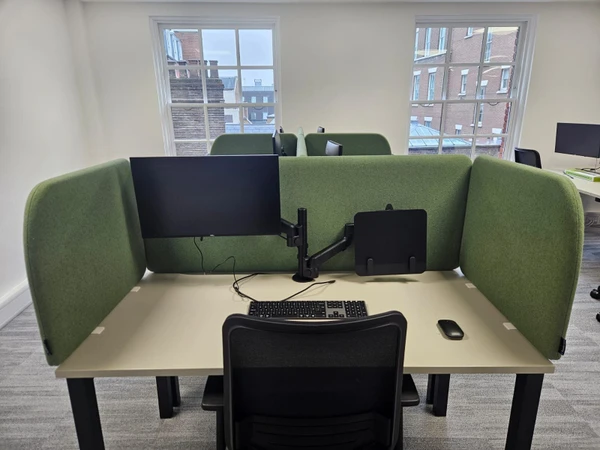 Case Study: Hush 50 Desk Screens, Totum Partners
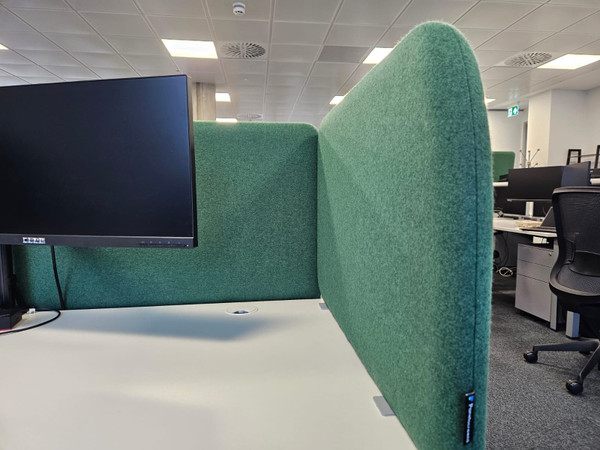 Case Study: Bespoke Acoustic Desk Screens for Vorwerk
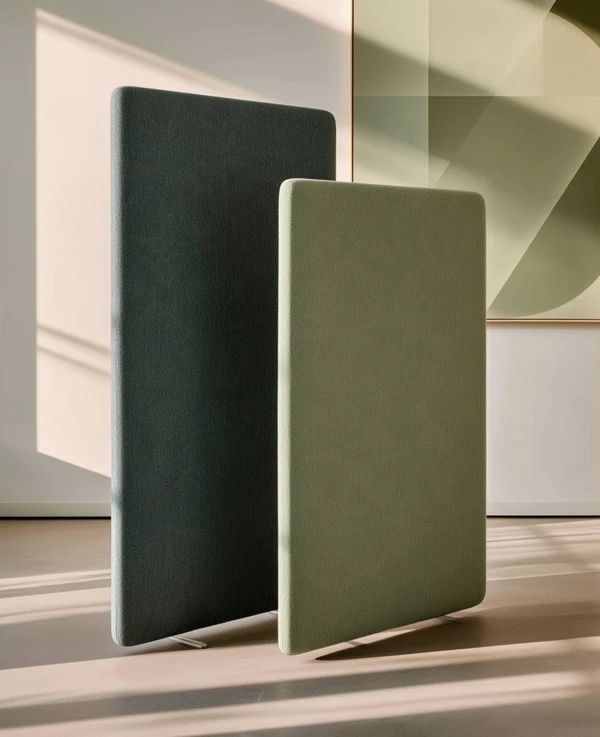 Office Partition Walls: Fixed vs Freestanding and How to Choose