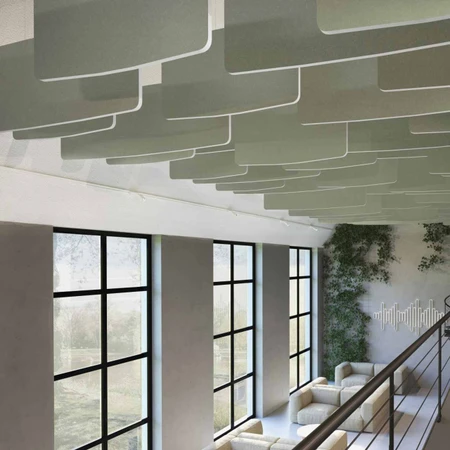
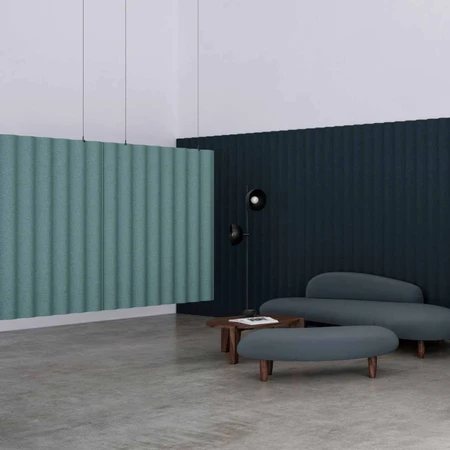
Hanging acoustic panels and acoustic baffles absorb sound from above, cutting echo in open-plan offices, atriums, canteens, schools and other large rooms. Where walls are glazed or full of furniture, the ceiling is often the biggest surface left to treat, and hanging panels let you add sound absorption without losing floor or wall space.
Acoustic baffles and sound baffles
Acoustic baffles hang vertically from the ceiling, so both faces absorb sound. This makes sound baffles one of the most efficient ways to reduce reverberation in high-ceilinged or industrial spaces, and they suit exposed concrete soffits as well as suspended ceilings. Our Basic acoustic ceiling baffles start from around £106.
Decorative hanging acoustic panels
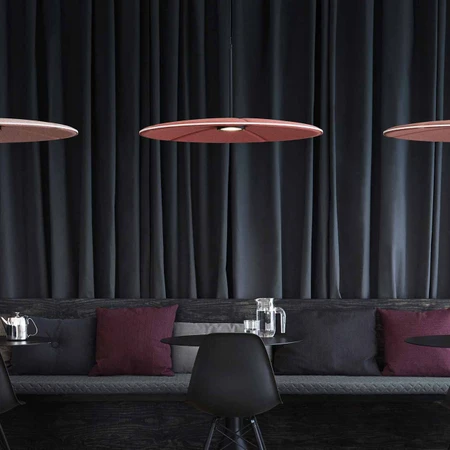
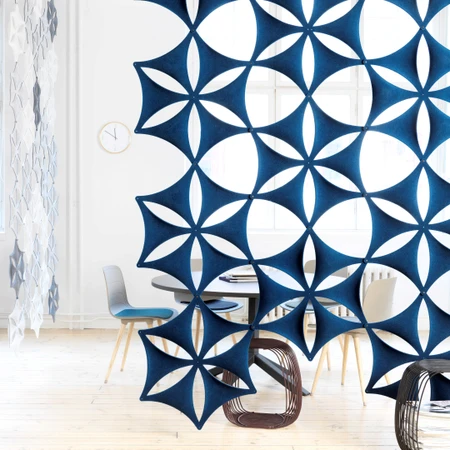
For reception areas, breakout spaces and meeting rooms, sculptural designs such as Airleaf, Airflake, AirCone, Air Bloom and Air-X absorb sound while adding a design feature. Acoustic lights combine lighting and sound absorption in one pendant, ideal above meeting tables.
Hanging panels, ceiling panels or wall panels?
Hanging baffles work best in large, high rooms. For lower ceilings, flat acoustic ceiling panels and rafts sit closer to the ceiling, while acoustic wall panels treat echo at ear height. Read our guide to acoustic ceiling panels for offices to compare clouds, baffles and tiles, or have them installed by our team.
Where hanging acoustic panels work best
Hanging panels and baffles are the best way to treat a room where the ceiling is the main problem. They suit:
- Open-plan offices with high or exposed concrete ceilings, where there is nowhere to fit ceiling tiles
- Atriums, receptions and stairwells, where sound bounces around a large open volume
- Canteens, breakout areas and classrooms, where lots of people talk at once
- Meeting rooms with glass walls, where wall panels are not an option
How many hanging panels do you need?
Hard rooms with high ceilings need more absorption than carpeted rooms with lower ceilings. As a general rule, spread panels evenly over the noisy area rather than grouping them in one spot, and focus on the areas where people talk most, such as above desks, tables and serving counters. Baffles are usually hung in rows across the room. If you send us your room size and ceiling height, we can suggest a layout.
Acoustic lighting
If you are short of ceiling space, acoustic lights combine lighting and sound absorption in one fitting. Our Abstracta Trumpet and Lily acoustic lights hang above desks and tables, lighting the space while absorbing noise.
Designer hanging panels from Abstracta
As well as simple ceiling baffles, we supply decorative hanging panels from Abstracta, including Airflake, Airleaf, Air-X, AirCone, Air Bloom and Scala. They add shape and colour to a ceiling while cutting echo, so they work well in receptions and client-facing spaces.
Want to understand how much difference panels make? Read do acoustic panels work? and our guide to acoustic ceiling panels for offices.
Frequently asked questions
What are acoustic baffles?
Acoustic baffles are sound absorbing panels that hang vertically from the ceiling. Because both faces are exposed, they absorb sound from every direction, which makes them very effective at cutting echo in large or high-ceilinged spaces.
Where should hanging acoustic panels go?
Hang them above the areas where people talk most, such as open-plan desks, meeting tables, canteens and reception areas. Rows of baffles running across the room, or clusters over noisy zones, give the best results.
Do hanging acoustic panels need a suspended ceiling?
No. They hang on cables from the soffit or ceiling grid, so they work with exposed concrete, high or industrial ceilings as well as standard suspended ceilings.
How long do hanging acoustic panels take?
Our hanging acoustic panels and baffles are made to order, with lead times of 3 to 6 weeks depending on the design. We can also install them for you anywhere in the UK.
Related reading: Do acoustic panels work?