
Soundproofing Panels vs Acoustic Panels: What Works in an Office
Posted by Panelscreens on 11th Oct 2026
Posted by Panelscreens on 11th Oct 2026
If you search for soundproofing panels, most of what comes up are soft fabric or foam panels. They are excellent at making a room quieter. But they will not stop sound passing through a wall. Knowing the difference saves money and disappointment.
This guide explains what each type does, when you need which, and what to buy for a typical UK office.
There are two separate problems people mean when they say "soundproofing".
Acoustic panels do the first job. True soundproofing does the second. Most offices actually have the first problem.
Acoustic wall panels are made from a porous core, such as acoustic foam, mineral wool or PET felt, usually wrapped in fabric. Sound enters the core and loses energy as heat instead of bouncing back.
The result is a room that sounds calmer:
Panel performance is measured as an NRC (noise reduction coefficient) from 0 to 1. An NRC of 0.55 means the panel absorbs about 55% of the sound energy that hits it. Our Muffle acoustic wall panel has a 25mm sound-absorbing core with an NRC of 0.55, measured by Sound Research Laboratories in 2023.
Acoustic panels are light and porous, which is exactly why they absorb sound. It is also why they do very little to stop sound passing through a wall. Fixing panels to a thin partition will make both rooms sound better, but you will still hear the meeting next door.
If a supplier promises that a fabric wall panel will "soundproof" a room against noise from outside, be sceptical.
Stopping sound passing between spaces relies on three things:
This is building work, usually done by a fit-out contractor. It is the right answer for a confidential HR room or a recording studio. It is overkill for an open-plan office that is simply too loud.
| Your problem | What helps | Typical solution |
|---|---|---|
| Open-plan office feels loud and echoey | Absorption | Acoustic wall panels, ceiling panels, acoustic screens |
| Video calls sound hollow | Absorption | Wall panels behind and opposite desks |
| Speech carries between nearby desks | Absorption + blocking | Acoustic desk dividers and freestanding screens |
| People need private calls | Enclosure | Phone booths or office pods |
| Noise comes through a wall from next door | Insulation | Building work: mass, sealing, decoupling |
For most offices the best results come from combining absorption with a little blocking: wall panels to cut echo, plus acoustic screens between teams.
Our acoustic wall panels range includes made-to-measure Muffle panels from 400 to 2000mm wide and 400 to 1200mm high, frameless 40mm Quad Fan tiles, and natural cork panels. Muffle wall panels start from £82.50 ex VAT.
Acoustic panels work very well for reducing echo and noise inside a room. They do not stop sound travelling through walls. For that you need building work that adds mass and seals gaps.
Acoustic panels absorb sound inside a room. Soundproofing blocks sound from passing between rooms. They solve different problems.
Only slightly. They are too light and porous to block sound through a wall, though they will make your own room sound calmer.
A good starting point is covering 15 to 25% of the wall area, more in very hard, echoey rooms. Send us your floor plan and we will recommend a layout.
They should be. Ask for the fabric and core fire ratings. Our Melton wool panels are tested to EN 1021-1 and 2 and BS 5852 Crib 5.
Not sure what your office needs? Contact us with your floor plan and we will recommend the right mix of panels and screens, free.
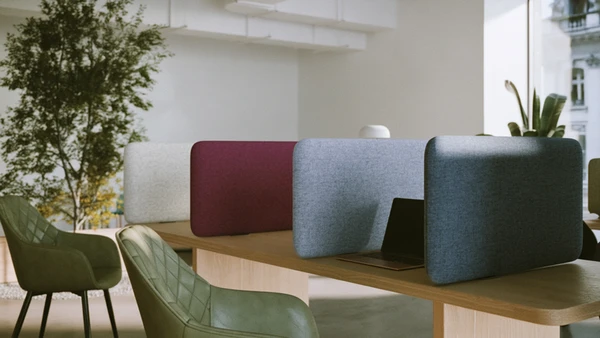 Do Acoustic Panels Work? How Many You Need for an Office
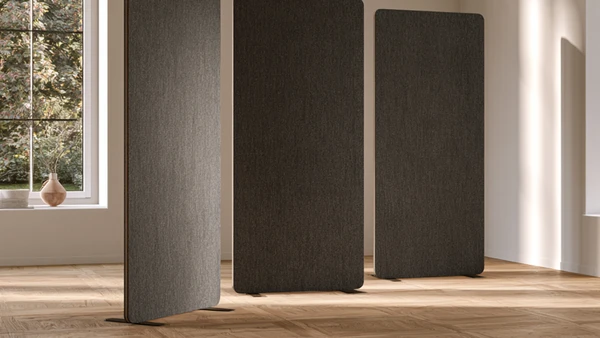 Office Room Dividers: Which Type Do You Need?
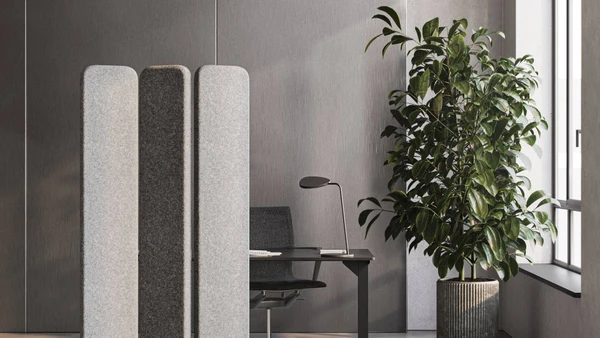 How to Reduce Noise in an Open Plan Office: 9 Practical Fixes
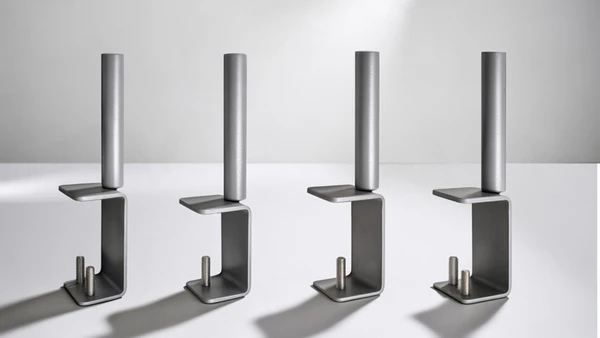 Desk Screen Clamps and Fixings: Which One Do I Need?
 Office Pods vs Phone Booths vs Meeting Pods: Which Do You Need?