
Do Acoustic Panels Work? How Many You Need for an Office
Posted by Panelscreens on 8th Oct 2026
Posted by Panelscreens on 8th Oct 2026
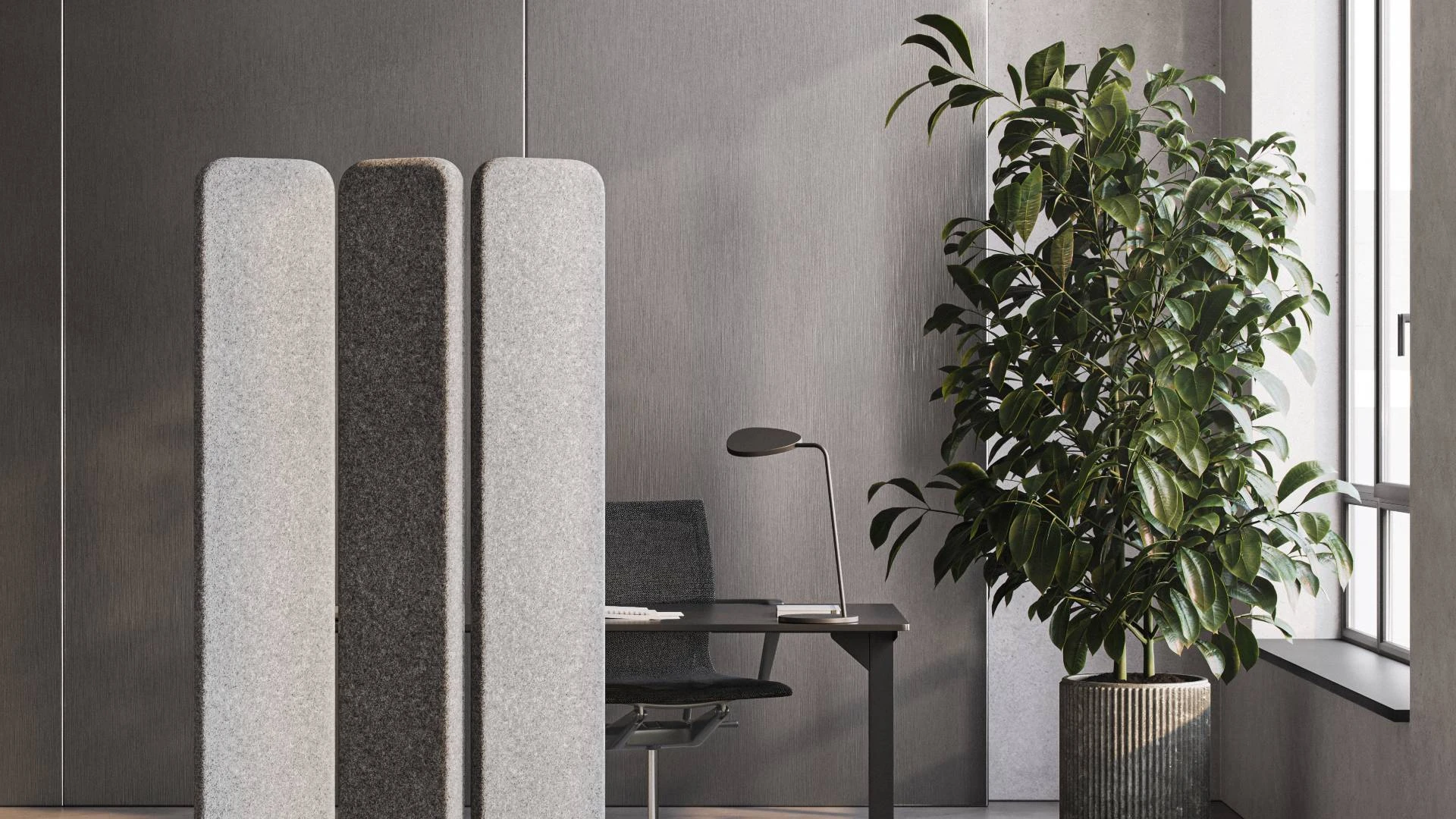
Yes, acoustic panels work, but only for the job they are designed to do. They absorb sound that bounces around a room, which cuts echo and makes speech clearer and calmer. They do not stop sound travelling through walls into the next room. This guide explains what acoustic panels are, what they can and cannot fix in an office, and how many you need.
Acoustic panels are soft, porous panels, usually a fabric-wrapped core of foam, mineral fibre or polyester, that fix to walls or ceilings. When sound waves hit a hard surface such as plaster, glass or concrete, most of the energy bounces back into the room. When they hit an acoustic panel, much of that energy passes into the core and is turned into a tiny amount of heat instead of being reflected.
The result is a room with less echo (reverberation). Voices stop building on top of each other, phone calls are easier, and the general hum of an office drops.
They do, and the effect is easy to hear. A meeting room with bare walls, a glass wall and a hard floor can sound like a stairwell. Add panels to the walls and the same conversation sounds closer and clearer, because you hear the voice rather than its reflections.
What acoustic panels do well:
What acoustic panels do not do:
This is why you will often see "soundproof panels" for sale. True soundproof panels do not really exist as a wall-mounted product. What people usually mean, and what actually helps in an office, is sound absorbing panels.
Panels are rated with a Noise Reduction Coefficient (NRC), a number between 0 and 1. An NRC of 0 means the surface reflects almost all sound, like painted concrete. An NRC of 1 means it absorbs almost all of it. Thicker, denser cores generally absorb more, especially at lower frequencies.
As an example, our Muffle acoustic wall panel has a 25mm core with an NRC of 0.55, meaning it absorbs over half of the sound energy that hits it. Thicker panels and baffles go further.
There is no single number, because every room is different, but a reliable rule of thumb for offices and meeting rooms is to cover 15 to 25% of the wall area with acoustic panels.
To work it out, multiply the length of each wall by its height, add them together, and take 15 to 25% of that total. For example, a 5m by 4m meeting room with 2.7m ceilings has about 48.6m² of wall. At 20% coverage you need around 9.7m² of panels, which is roughly ten 1200mm by 800mm panels.
If you are not sure, send us your room sizes and we will suggest a layout for free.
Placement matters as much as quantity. A few principles get you most of the benefit:
For more on placement, read where to install sound insulation panels for maximum effect.
Browse the full range of acoustic wall panels, and order free fabric samples to match your colours.
Wall panels cut echo across the whole room, while screens stop sound travelling directly between people. In open-plan offices the quietest results come from using both: panels on the walls or ceiling, plus acoustic desk dividers between workstations. Our guide on how to reduce noise in an open plan office covers the full approach, and we can install your panels and screens anywhere in the UK.
Yes. Acoustic panels absorb sound reflections inside a room, which reduces echo, makes speech clearer and lowers the overall noise level. They do not soundproof a room or stop sound passing through walls.
Acoustic panels absorb sound inside a room to cut echo. Soundproofing blocks sound travelling between rooms and needs heavy, airtight construction. Wall-mounted soundproof panels do not really exist; what helps in most offices is sound absorption.
As a rule of thumb, cover 15 to 25% of the wall area. Use the lower end for rooms with carpet and soft furniture, and the higher end for rooms with hard floors, glass or high ceilings.
At ear height, on parallel walls that face each other, and close to where people talk most. Spread panels around the room rather than grouping them on one wall, and consider the ceiling in large open spaces.
Not significantly. They reduce echo within the room they are in. To reduce noise from a neighbouring room, you need to improve the wall itself, doors and any gaps.
Yes. We supply and install acoustic wall panels, office screens and desk dividers anywhere in the UK, and offer free layout advice.