
Where to Install Sound Insulation Panels for Maximum Effect
Posted by Panel Screens on 5th May 2026
Posted by Panel Screens on 5th May 2026
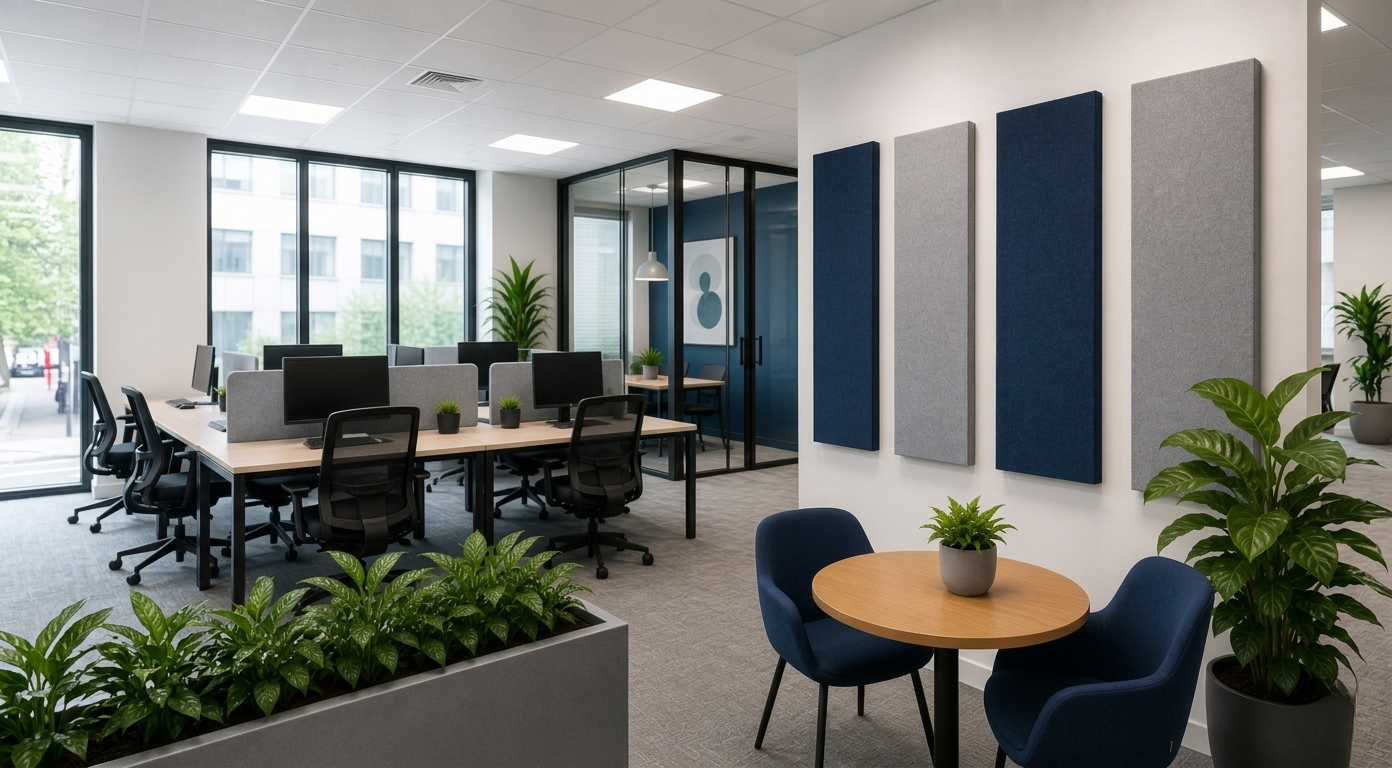
If you've ever tried to concentrate in a noisy open-plan office, you'll know exactly how exhausting it gets. Phones going off, colleagues talking across desks, the general hum of a busy floor, it builds up quickly and takes a real toll on focus and productivity.
Sound insulation panels for walls are one of the most straightforward ways to tackle this. They're cost-effective, they work, and they don't require any major building work. But here's the thing, most people don't realise that where you place them matters just as much as which panels you choose.
Get the positioning right, and the difference is noticeable almost straight away. This guide covers the most effective locations to install sound insulation panels across different types of UK office environments.
Sound doesn't just travel in straight lines. It bounces off hard surfaces like walls, ceilings, windows and floors, building up into what acousticians call reverberation. This is why some offices feel unbearably loud even when the actual number of people in them is relatively small.
Sound insulation panels work by absorbing sound waves before they get the chance to reflect and accumulate. To do that well, they need to be positioned where sound is generated, or along the paths it travels most freely through the space.
Random placement gives random results. Thoughtful placement gives you a noticeably calmer, more productive office.
The most obvious source of noise in any open-plan office is the people working in it, which makes desk areas the logical starting point.
Positioning panels between individual workstations creates a personal acoustic buffer. It reduces the direct transfer of voice noise, keyboard sounds, and general desk activity between nearby colleagues. For anyone doing focused work or taking calls throughout the day, even a modest barrier makes a significant difference.
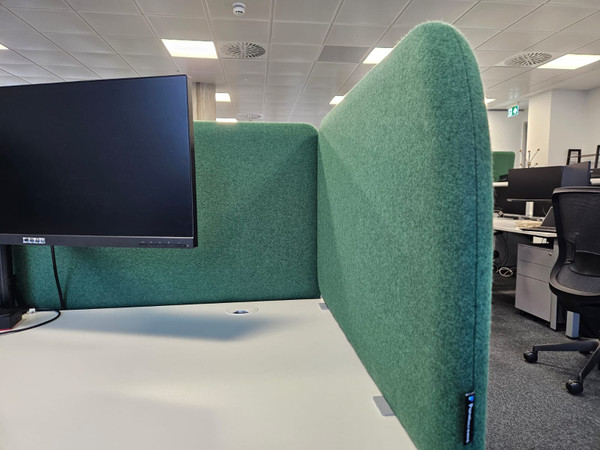
Desk screens are purpose-built for exactly this. They sit directly on or between desks, creating a degree of acoustic separation without closing off the space or making it feel enclosed. They work particularly well in hot-desking layouts and open benching arrangements where people sit in proximity.
Corridors are one of the most commonly overlooked contributors to office noise. They carry sound from one part of a building to another. When they run alongside quieter working areas, the noise bleed can be considerable.
Installing sound insulation panels for walls along corridor surfaces absorbs footstep noise, echoes conversation and the general movement of people through the building. It is a relatively simple intervention that can significantly reduce the background noise reaching the main office floor.
This becomes especially relevant when a corridor connects noisier zones, such as reception areas or kitchen spaces, to quieter workspaces.
High ceilings and exposed ceiling designs are popular in modern UK offices, particularly in converted buildings and co-working spaces. They look good. Acoustically, though, they tend to be problematic.
Sound travels upward and reflects straight back down, often amplified across the whole floor. The result is a room that feels consistently loud regardless of how many people are in it.
Hanging acoustic panels are the most practical solution here. Suspended from above at considered heights, they intercept sound before it has the chance to bounce and build up. They are also a sensible option when usable wall space is limited or when the office layout changes frequently, making fixed wall panels impractical.
Meeting rooms generate significant sound leakage, and glass-walled rooms, as popular as they are in contemporary office design, do very little to contain it.
Placing sound insulation panels on the interior walls of a meeting room, or on the walls immediately surrounding it, reduces both incoming and outgoing noise. For teams that rely on regular calls or need some confidentiality in their conversations, this is particularly worthwhile.
Where a fully enclosed room is not practical, an office pod or booth offers a contained acoustic environment that can be positioned wherever it is needed on the office floor. Pairing a pod with acoustic screens around the surrounding desk area extends that acoustic benefit further out into the open floor, giving teams the privacy of a room without any permanent construction.
This is a placement consideration that often gets missed entirely. When two hard walls run parallel across a relatively narrow space, sound bounces back and forth between them, creating a pattern called a flutter echo. It makes voices sound unclear, and rooms feel noisier than the actual sound level would suggest.
Installing sound insulation panels for walls on one or both of these surfaces breaks up that reflection pattern. It is particularly useful in narrow open-plan offices, conference rooms, and any space regularly used for video calls or presentations where speech clarity matters.
Breakout areas and kitchens generate a disproportionate amount of noise relative to their size. Appliances, casual conversation, movement in and out throughout the day, it all spills freely into adjacent working areas if there is nothing to absorb it.
A considered arrangement of sound insulation panels between a breakout zone and the main working floor acts as a soft acoustic transition. It will not block every sound, but it takes the edge off considerably and makes the surrounding workspace feel calmer.
Aim to cover roughly 20-25 per cent of a room's total surface area with acoustic material to achieve a meaningful reduction in noise levels. A single row of panels on one wall will help, but distributing panels across multiple surfaces and at different heights yields far better results.
Work outward from the noisiest zones first. Tackle the areas generating the most disruption before addressing secondary spaces.
Corner placements are worth considering as well. Sound tends to pool in corners, and panels positioned there can be more effective than their size might suggest.
Yes, provided they are placed thoughtfully. They will not turn an open office into a silent space, but they meaningfully reduce echo, reverberation and direct noise transfer, which makes a genuine difference to how comfortable and productive a space feels.
A common starting point is acoustic coverage across around 20 to 25 per cent of the room's wall or ceiling surface. Begin with the noisiest areas and build from there based on how the space responds.
Many are freestanding or desk-mounted and can be repositioned without any fuss. Ceiling-hung panels require a bit more planning to move, but they still offer far more flexibility than a permanent construction solution.
Smaller spaces often have worse acoustics because there is less room for sound to dissipate naturally. Even a handful of well-placed panels can make a compact office feel noticeably calmer and easier to work in.
Soundproofing is about preventing sound from passing between spaces. Sound absorption reduces echo and reverberation within a space. Office acoustic panels generally focus on absorption, which is what makes open-plan environments feel quieter day to day.
Freestanding and desk-mounted panels typically require no installation. Wall-mounted options are straightforward to fit and usually come with the necessary fixings. Ceiling-hung panels may need a brief assessment of the fixing points, but the process is generally simple.
Most people notice a difference almost immediately, particularly in echo and in how clearly voices carry. The full benefit becomes more apparent once panels are in place across several key zones rather than just one area.
Related reading: Do acoustic panels work?
 Case Study: Bespoke Acoustic Desk Screens for Vorwerk