
How to Reduce Noise in an Open Plan Office: 9 Practical Fixes
Posted by Panelscreens on 7th Oct 2026
Posted by Panelscreens on 7th Oct 2026
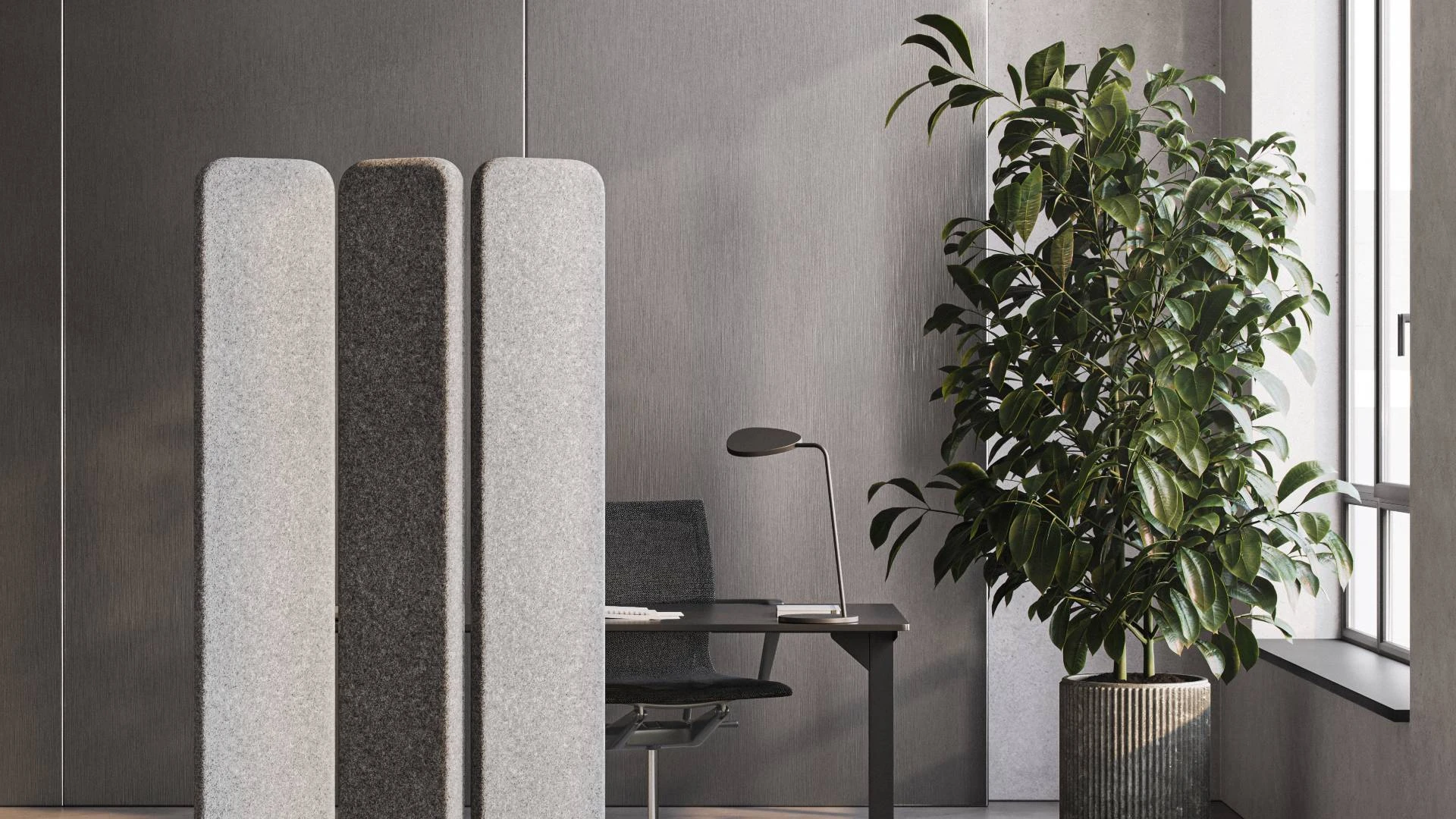
If your team keeps putting headphones on just to think, you already know the problem. Open plan offices are great for space and cost, but they let speech travel. This guide explains how to reduce noise in an open plan office without building walls or moving buildings. We cover why the noise happens, the simple ABC rule acousticians use, and nine practical fixes ranked by cost and impact. You'll also find a quick way to measure the noise before and after, so you can prove the changes worked.
The short answer: reduce open plan office noise by absorbing sound with acoustic panels and screens, blocking it with desk dividers and freestanding partitions, and covering what's left with layout changes, quiet rooms and gentle background sound. Start with acoustic desk dividers and wall panels, as they tackle speech, the most distracting noise, for the least disruption.
Most modern offices are full of hard surfaces: glass, plasterboard, concrete ceilings and laminate desks. Hard surfaces reflect sound instead of absorbing it, so every phone call and conversation bounces around the room. Add rows of desks with nothing between them and speech carries a long way.
It isn't the overall volume that hurts concentration most. It's intelligible speech. Your brain can't help following words it can understand, which is why a colleague's phone call is far more distracting than the hum of air conditioning.
The impact is real. In a 2019 survey of 1,000 UK office workers, 52% said noise interrupted them more than five times a day, and 65% said it affected the accuracy and timeliness of their work. Colleagues' phone conversations were the most annoying sound, named by 74%.
Open plan layouts can even reduce the collaboration they're meant to encourage. A Harvard study of two companies found face-to-face interaction fell by about 70% after a move to open plan, as people switched to email and messaging instead.
Acousticians often sum up noise control as Absorb, Block and Cover. Every fix in this guide does at least one of these. The best results come from combining all three.
| Principle | What it does | Typical fixes |
|---|---|---|
| Absorb | Soaks up sound so it doesn't reflect around the room | Acoustic wall panels, ceiling panels, fabric screens, carpet |
| Block | Puts a barrier in the path between the noise and the listener | Acoustic desk dividers, freestanding screens, pods |
| Cover | Makes remaining speech less intelligible or moves it elsewhere | Zoning, quiet rooms, phone booths, background sound |
Desk dividers are the quickest win because they sit right between the person talking and the person trying to concentrate. An acoustic desk screen both blocks the direct path of speech and absorbs some of it, so conversations carry less across a bank of desks.
Height matters. A screen around 400mm above the desk gives privacy when seated without cutting out light. Choose 500 to 600mm for call centres or anywhere people spend a lot of time on the phone. Our desk divider sizes guide explains how to choose height and width.
Freestanding acoustic office screens create walls without building work. Use them to separate noisy teams, such as sales or customer service, from people doing focused work. Screens of 1500mm and above block most noise and sightlines when people are seated, and 1800mm screens can create room-like meeting areas.
Thickness makes a difference too. Thicker acoustic cores absorb more sound, so a 70mm screen will absorb more than a 38mm one. Link screens into L-shapes or bays to wrap around a team rather than leaving a single straight line.
Linked together, freestanding screens become movable partition walls. See our office partitions guide for heights and layouts.
Bare walls reflect speech straight back into the room. Acoustic wall panels absorb that reflected sound and cut the echo that makes a busy office feel loud. Focus first on large flat walls opposite or behind clusters of desks, and on meeting rooms with glass or plasterboard walls.
Our acoustic wall panels buyer's guide explains how to compare panels and where to put them.
The ceiling is often the largest hard surface in the room, especially in offices with exposed concrete. Acoustic ceiling panels, rafts and hanging baffles absorb sound that would otherwise bounce down onto the desks below. They work well where you can't add more screens without blocking walkways.
Carpet and rugs reduce footfall noise and soak up some reflected sound. If you have hard floors, add rugs under meeting tables and in breakout areas, and use felt pads on chair legs. Soft furnishings such as upholstered sofas and fabric pinboards help in the same way.
Where people sit can matter as much as what you buy. Group teams that talk a lot together, and keep them away from people doing focused work. Put printers, kitchens and breakout areas away from desks, and avoid seating people along main walkways.
A simple zoning plan might have a lively area near the entrance, a buffer of storage or screens, and a quiet zone at the far end of the office.
Even the best-treated open plan office needs places for calls and private conversations. Office pods and phone booths take the loudest activity, phone and video calls, off the main floor. If you're unsure which you need, compare them in our guide to office pods vs phone booths.
Very quiet offices can actually make speech more distracting, because every word stands out. Low-level background sound, from air handling or a sound masking system, makes distant speech harder to understand. Keep it subtle: the aim is to cover speech, not to add another noise people notice.
Small habits add up. Agree that long calls happen in booths or meeting rooms, that people use headsets rather than speakerphone at their desks, and that phones go on silent. Make the quiet zone clearly signed so everyone knows the rules.
Not every office needs every fix. Use this table to decide where to start.
| Fix | Tackles | Relative cost | Disruption to install |
|---|---|---|---|
| Acoustic desk dividers | Speech between neighbouring desks | Low | Very low, clamp or stand on desks |
| Freestanding acoustic screens | Noise between teams and zones | Low to medium | Very low, no building work |
| Acoustic wall panels | Echo and reflected sound | Medium | Low, wall mounted |
| Ceiling panels and baffles | Echo in large or high rooms | Medium | Medium, may need a fitter |
| Pods and phone booths | Calls and private conversations | Higher | Low, delivered and assembled |
| Layout and etiquette | Where noise is made | Free | Low |
For most offices, the best order is: desk dividers and layout first, then screens and wall panels, then pods for calls.
Measure before you buy so you can see what changes. A free decibel meter app on a phone gives a rough reading. Take readings at a few desks at busy times of day, and note where people complain most.
Numbers alone don't tell the whole story, because speech at a moderate level can still be very distracting. Ask your team two simple questions before and after: how often are you interrupted by noise, and can you hear colleagues' conversations clearly from your desk? If the second answer moves from yes to no, your changes are working.
Reducing noise in an open plan office doesn't need building work or a big budget. Start with the noise people notice most, speech, and use the ABC rule: absorb it with panels and fabric, block it with desk dividers and screens, and cover what's left with good layout, quiet rooms and gentle background sound.
Panelscreens has made acoustic screens in the UK for over 20 years. Browse our acoustic desk screens and acoustic office screens, order free fabric swatches, or contact us for free advice on your layout.
The best way is to combine three approaches: absorb sound with acoustic panels, block it with desk dividers and screens, and cover what's left with zoning and quiet rooms. Acoustic desk dividers are usually the best first step, because they tackle speech between neighbouring desks with very little disruption.
Yes. Acoustic desk dividers block the direct path of speech between desks and absorb some of the sound, so conversations carry less. Thicker screens absorb more, and height matters: screens 400 to 600mm above the desk work best for seated staff.
Intelligible speech is the most distracting office noise, especially phone calls. In a 2019 survey of 1,000 UK office workers, 74% named colleagues' phone conversations as the most annoying sound, ahead of personal conversations and sudden laughter. That is why fixes that block speech between desks make the biggest difference.
Plants help a little, but not much on their own. Large plants with dense leaves can scatter and absorb some sound, and they make an office more pleasant. For a noticeable reduction, combine them with acoustic screens, wall panels or ceiling panels.
Use freestanding acoustic screens to create zones, add acoustic desk dividers, and fit acoustic panels to walls and ceilings. None of these need building work or landlord approval. Pods and phone booths can also give people a quiet space for calls.
Yes, low-level background sound can help, because it makes distant speech harder to understand. It should be subtle and steady, not loud enough to notice. It works best alongside acoustic screens and panels, not as a replacement for them.
Related reading: Office room dividers: which type do you need? · Do acoustic panels work?
For a room-by-room plan of where to put panels, see our guide to where to install sound insulation panels for maximum effect.
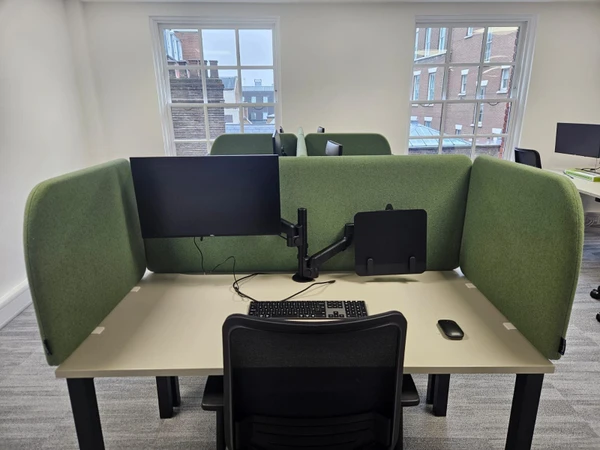 Case Study: Hush 50 Desk Screens for Totum Partners, London
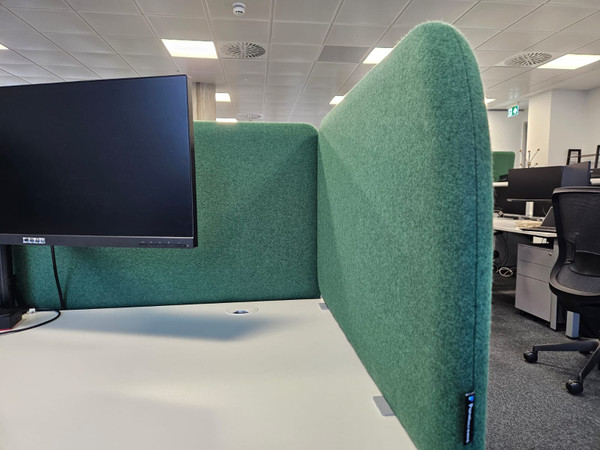 Case Study: Bespoke Acoustic Desk Screens for Vorwerk