
Office Room Dividers: Which Type Do You Need?
Posted by Panelscreens on 8th Oct 2026
Posted by Panelscreens on 8th Oct 2026
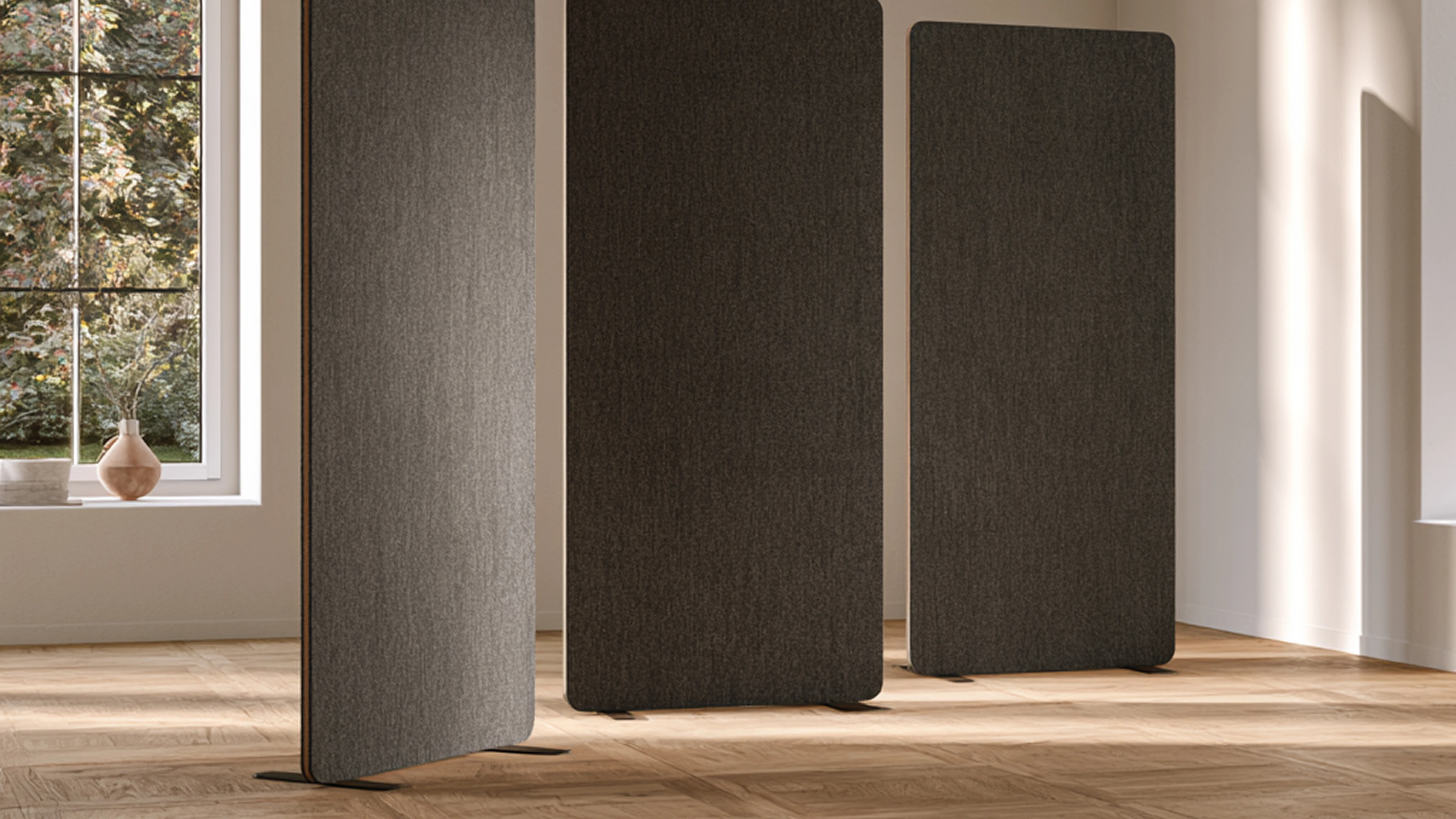
Office room dividers are the quickest way to change how a space works without building walls. They can turn one open room into zones for focus, meetings and breakouts, give staff privacy at their desks, and cut noise, all in an afternoon and without planning permission or a builder. This guide compares the main types of room dividers for offices so you can choose the right one for your space.
An office room divider is any freestanding screen or partition used to split up a room. Unlike a fixed stud wall, it can be moved, reconfigured or taken with you when you move office. Most office dividers are between 1200mm and 1800mm high. That is tall enough to block sight lines when people are seated, but low enough to keep light and air moving across the room.
The most popular choice. Fabric office dividers stand on their own feet, link together into longer runs or L-shapes, and are covered in hard-wearing fabric that softens the look of the office. Many are pinnable, so they double as noticeboards.
Best for: zoning open-plan offices, separating teams and creating semi-private work areas.
Acoustic dividers look similar to fabric screens but have a sound absorbing core, typically 40mm to 70mm thick. They absorb speech and background noise instead of just blocking the view, which makes a noticeable difference in busy offices, call areas and around meeting tables.
Best for: noisy open-plan offices, sales teams, call centres and anywhere people need to concentrate.
Mobile office screens sit on lockable castors so you can wheel them into place and move them again whenever the layout changes. Concertina folding screens fold flat for storage, making them a good fit for multi-use rooms.
Best for: flexible spaces, training rooms, schools and offices that change layout often.
Glazed office dividers combine a solid lower panel with a clear upper section, while glass screens are clear all the way. They separate spaces while keeping the room bright and open, so nobody feels boxed in.
Best for: receptions, managers' areas and darker offices where you want to keep natural light. Note that glazed screens do not absorb sound.
Wooden office screens bring a warmer, more residential feel. They suit creative studios, breakout areas and client-facing spaces where looks matter as much as function.
Best for: design-led offices, hospitality and breakout spaces.
If you need screens quickly or on a tight budget, our budget office partition screens and fast delivery room dividers are a practical option, with some ranges dispatched in a few working days.
| Type | Privacy | Noise reduction | Flexibility | Light |
|---|---|---|---|---|
| Fabric | Good | Some | Good | Blocks |
| Acoustic | Good | Best | Good | Blocks |
| Mobile | Good | Some | Best | Blocks |
| Glazed / glass | Partial | None | Good | Keeps |
| Wooden | Good | Little | Good | Partial |
For noisy open-plan offices, room dividers work best alongside desk dividers and acoustic wall panels. See our guide on how to reduce noise in an open plan office, or browse all office screens and room dividers.
For most open-plan offices, freestanding acoustic dividers are the best all-round choice because they give privacy and absorb noise. Choose glazed dividers if keeping light is the priority, or mobile screens if the layout changes often.
Around 1200mm divides space while keeping people visible, 1500mm gives privacy when seated, and 1800mm blocks views even when standing.
Standard fabric and glazed dividers mainly block sight lines. Acoustic room dividers have a sound absorbing core that absorbs speech and background noise, so choose acoustic screens if noise is the main problem.
Yes. Most freestanding office screens can be joined with linking fixings to create straight runs, L-shapes, T-junctions and booths.
No. Freestanding room dividers are furniture, not building work, so they do not need planning permission or building control approval. Always keep fire exits and escape routes clear.
Yes. We supply and install office screens and room dividers anywhere in the UK, with free layout advice.