
Setting Up an Office for Hot-Desking Without It Feeling Chaotic
Posted by Panel Screens on 2nd Aug 2026
Posted by Panel Screens on 2nd Aug 2026
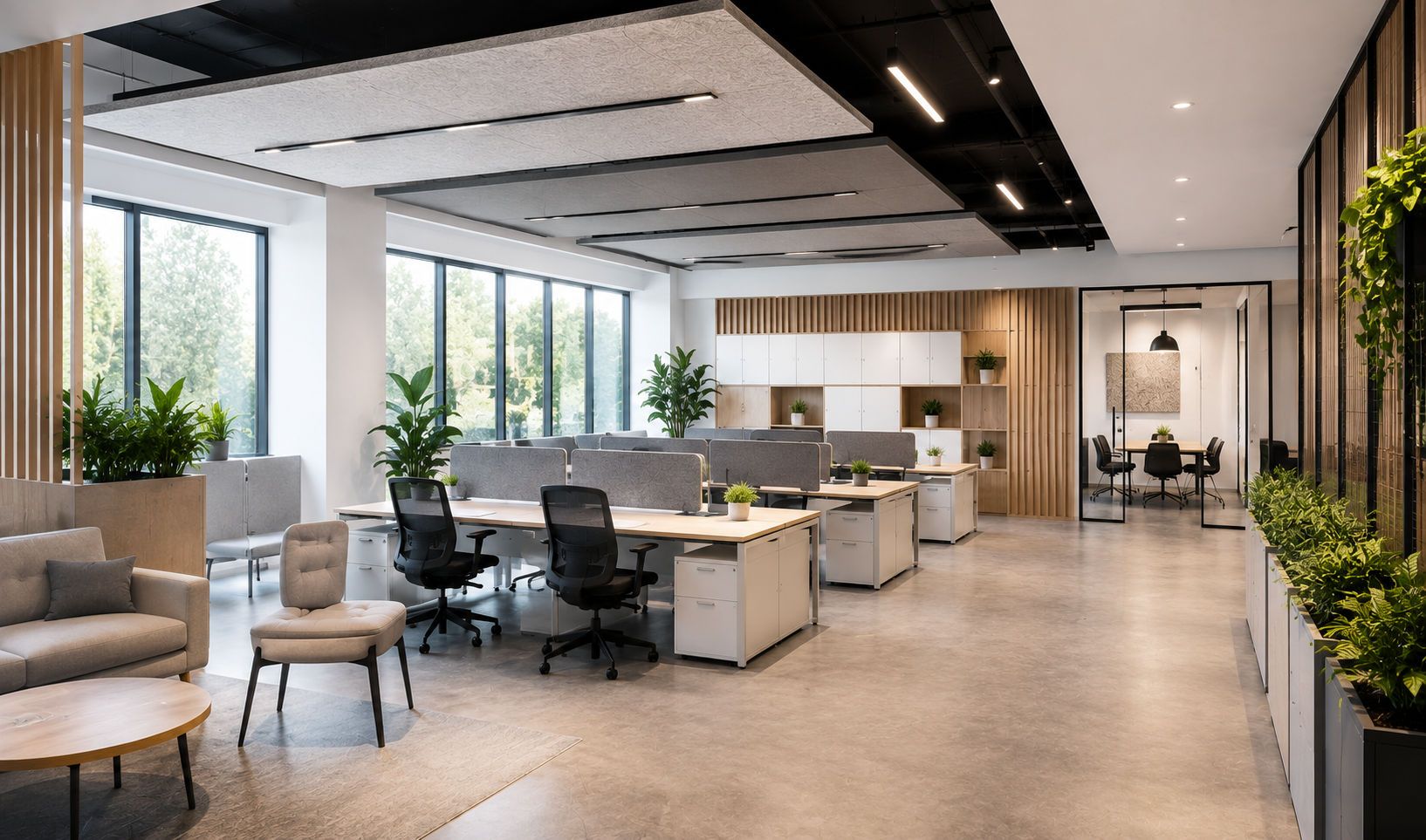
Hot desking sounds simple on paper. Fewer fixed desks, more flexibility, lower costs on office space that sits empty three days a week. In practice, a lot of offices roll it out and then spend the next few months fighting the same problems. Bags on chairs holding a spot. People taking calls at their desk because there's nowhere else to go. Nobody quite sure where the meeting room sign-up sheet is this week.
None of that is really a hot-desking problem. It's a layout problem. The desks changing hands isn't what causes the chaos, it's usually that nothing around the desks was set up to support people moving around. Get a few of those pieces right, and hot-desking tends to run itself.
The biggest mismatch in a lot of hot-desking offices is that the desks are flexible, but everything else around them isn't. Fixed partition walls, screens bolted into position, storage units that only make sense for one layout. If the desk arrangement is going to shift from week to week, or even day to day, the furniture needs to be able to shift with it.
This is where mobile office screens earn their keep. They're on wheels, so a team can reconfigure a bank of desks in minutes rather than putting in a request to facilities and waiting a week. Some businesses use them to break a large open floor into smaller working clusters in the morning, then push them back for an all-hands or a training session in the afternoon. That kind of flexibility is really the whole point of hot-desking, and it only works if the furniture doesn't fight against it.
One of the quieter frustrations with hot-desking is that people lose the sense of "their" space, and with it, a bit of the privacy they didn't realise they relied on. Someone who used to have a corner desk facing a wall might now be sitting in the middle of a busy row, in direct eyeline of six other people.
Desk screens solve this without needing to redesign anything. A simple screen that clips onto whichever desk someone happens to be using that day gives a bit of visual separation and helps cut down on the feeling of being watched while trying to concentrate. It's a small thing, but it's often what turns hot-desking from something people tolerate into something they don't mind at all. For teams on the phone a lot, it's worth looking at the acoustic versions too, since they do the same job for sound as well as sightlines.
Open-plan hot-desking works best when the space isn't actually one giant open room, even if it looks that way from the doorway. Good hot-desking layouts tend to have zones. A quieter area for focused work, a more relaxed area for collaboration, maybe a spot near the window that people gravitate toward for informal chats.
Screen dividers for rooms are the easiest way to build that structure without construction work. Glazed dividers keep the space feeling light and open while still marking a clear boundary between zones, which matters in an office that already relies on flexibility elsewhere. Fabric or curved dividers do a similar job with a bit more warmth if the space needs it. The point isn't to wall everything off, it's to give people visual cues about what kind of behaviour fits where, so the quiet corner stays quiet, and the collaborative area doesn't get treated like a library.
When nobody has a fixed desk, the usual habits of pinning a note above a monitor or leaving a sticky reminder on a screen stop working. Information that used to live at someone's desk needs a proper home instead, somewhere central that everyone passes on a normal day.
A folding display board handles this well, particularly in offices that also use the same space for events, training, or client visits. It can carry the week's desk booking rota, team announcements, or health and safety information, then fold flat and get moved out of the way when the room is needed for something else. It's a small addition, but it solves a real gap that hot-desking creates once people stop having a personal spot to check.
A lot of hot-desking frustration comes down to tiny, easily overlooked details rather than the big layout decisions. Where does a laptop bag go for the day? Is there anywhere to hang a coat? Can someone actually plug in without crawling under three other people's desks? Simple shelves, rails and organisers fitted to shared desks or screens go a long way here, giving people somewhere consistent to put things even when the desk itself changes daily.
Hot-desking doesn't need to be complicated to set up well. Most of what makes it work comes down to giving people the same things they'd expect from a fixed desk, just in a form that can move: somewhere to focus, some sense of personal space, clear zones, and information that's easy to find. Once those pieces are in place, the actual desk-swapping part tends to sort itself out.
If you're planning a hot-desking layout and aren't sure where to start, contact us, and our team is happy to talk through what would suit your space and how the different products can work together.
It depends on how the office is used day to day. If most people are on calls or in a genuinely open-plan layout, acoustic desk screens make a noticeable difference to noise as well as privacy. If the main issue is just visual separation, standard desk screens are usually enough.
This varies by team size and layout, but a good starting point is enough to divide the main desking area into two or three flexible zones, with a few spares kept for reconfiguring the space for meetings or events.
For most hot-desking layouts, yes. They mark out a zone clearly enough for people to understand where one area ends and another begins, without making the office feel closed in the way a solid wall can.
A folding display board is a practical option since it can be placed centrally, updated easily, and folded away when the space is needed for something else, which suits offices that don't have room for a permanent noticeboard.
Yes, if anything, it matters more. Shared desks benefit from consistent storage that doesn't depend on who used the desk yesterday, so people always know where to put a bag, coat or cables regardless of which desk they're sitting at.
Related reading: Office room dividers: which type do you need?
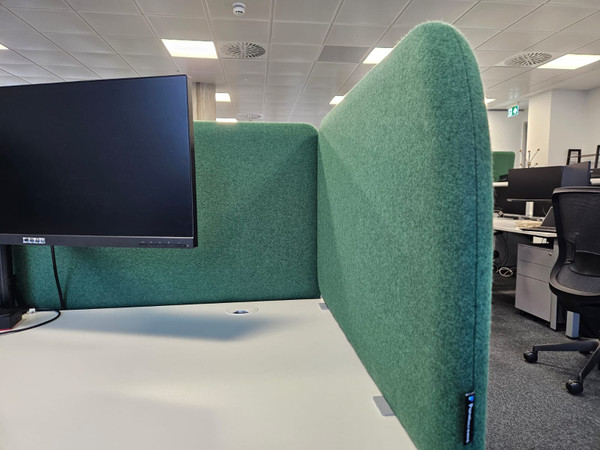 Case Study: Bespoke Acoustic Desk Screens for Vorwerk